Showing posts with label Indie Author Month. Show all posts

31 May 2014

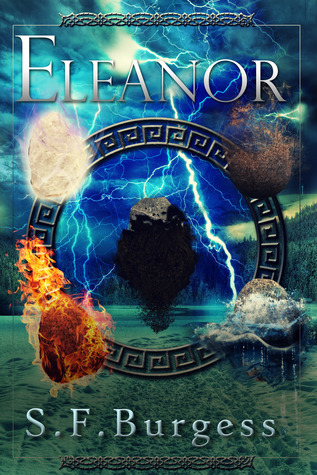
Guest post: S.F. Burgess talks about her inspiration for 'Eleanor'


"Most people's lives begin with their births; mine began with my death."


In the final moments of her life, the enigmatic Conlan drags Eleanor from her world and into his. Mydren - a vast, majestic land where myths have substance, magic is terrifyingly real and Eleanor is marked for death.


Reborn as an Avatar, the living incarnation of an ancient magic, Eleanor must think fast and act faster if she wishes to survive. This new life comes with a price; Conlan has a vital and dangerous mission to undertake.


Eleanor must learn to control her newfound abilities and cope with a host of dangers both mystical and natural, while helping her fellow Avatars to master their own talents, so they can get the connection between them working.


Can she make 'The Five' a force to be reckoned with? Will their deadly enemies destroy them? Can Eleanor overcome her own fears and find the courage she needs to reach Conlan and release him from his dark secrets?

My first day at school, as a confused, frightened four year old, I made a friend called Alex. Alex was fun and full of smiles and she seemed much more able to cope with what was happening than I was, older than her years somehow. As we moved through school Alex became a good friend, even when she left to go to sixth form at another school we kept in touch. When she died tragically, far too young, I was devastated, but Alex had made a lasting impression. She was a tiny girl, not quite five foot, but what she lacked in size she made up for with her joy of life, her intelligence, her determination and her loud voice. I’d always considered her larger than life.
While Alex was never quite as reckless or arrogant as Eleanor can be, she had become a voice in my head, telling me to keep going, reminding me that life could be over in a flash and that each moment should be seized. Not long after Alex died, I had a dream about her, as dreams often are, it was a little odd, but I woke up with one line in my head: 
“Most people’s lives begin with their birth, mine began with my death.” 


I wrote it in my notebook at the time, the date was the 24th Dec 2003. I also wrote down the dream, looking back at it now it’s strange, but essentially, those frantic, badly spelt scribbles that mark my desperate attempt to capture the emotion of my dream before it faded, are the first chapter of ‘Eleanor’ and the last chapter of the last book in the series. 

For the next few years this concept rattled around my head. I knew where I was starting, and I knew where I was ending, now I just had to fill in the middle. It took several years, but eventually I had a story arc that covered five books in total.

As I began to think about the story and research it, I wove aspects of my own life, my own beliefs into the story plan. I’m not religious, but I have spiritual tendencies, I believe that life has value and meaning in its own right. If I had to describe my own philosophy I guess ‘Wiccan- Buddhist’ might be a start. I also believe in the ‘noble virtues’, as I call them in the book: Compassion, Courage, Wisdom, Truth and Duty. Which I recently realised are very similar to the ‘Factions’ in Veronica Roth’s brilliant ‘Divergence’ trilogy: Amity, Dauntless, Erudite, Candor and Abnegation. Obviously this isn’t a coincidence, but a reflection of the human condition. With a few variants, these virtues have been traditional heroic ideals since Homer’s epic poetry. Just think, if everybody cultivated and lived by these virtues, violent conflict would be unlikely, the world would be an amazing place. While the different books in the series are told from different people’s point of view, the series is ultimately about Conlan, it’s his ‘mission’, his vision, that drives them and I wanted a main hero who would personify these virtues, who would live his life by them, but I didn’t want a flat, boring character.

I love fantasy books, I have learnt from giants like David Eddings, Terry Brooks, Trudi Canavan, Melanie Rawn, Robin Hobb and Glenda Larke to name but a favourite few and I knew, to be interesting and engaging my hero had to grow, had to learn, had to change. In ‘Eleanor’, Conlan is almost an anti-hero, he is abusive, intolerant, violent and brooding. Some of this comes from the horrific brutality he suffered as a child and his inability to deal with his emotions as a result, some of it comes from growing up in a society where brutality against women and those beneath you is perfectly acceptable and even expected in some circumstances, but most of it comes from never having been challenged to actually live the ‘noble virtues’, for Conlan, in the first instance they are ‘ideals’, something that he thinks about, not something he feels, not something he holds in his heart. The interaction he has with his Avatars will change this, they are going to force him to grow, especially Eleanor. Her arrival triggers Conlan’s transformation because she connects with him on an emotional level he has avoided. Occasionally she pushes him too far, too fast and suffers the consequences, but this also forces Conlan to grow, to assess and reassess himself and his beliefs, to become the better man.

There were a range of needs that drove the story line for ‘Eleanor’. I wanted to set the scene and establish the characters, but I also wanted it to be fun, exciting and interesting, so I chose to start with a traditional ‘hunt the magic objects’ quest. Much of the ‘action’ was created to enable the reader to understand the range and limitations of the Avatars abilities. I didn’t want to create situations where, whenever the Avatars get stuck, their magic suddenly gives them the solution, so there are hard rules to what they can achieve, but in the first book they needed to explore and learn what those rules were, but I have to admit, as I wrote the characters had quite a few surprises for me as they found their voices.

If you read the ‘story plan’ for ‘Eleanor’ you would recognise the basic things they do, but very little else would gel with the final book and this was due to the changes the characters made themselves. It was the characters talking to me, and each other, in my head, that created their reality, dictated their personalities and how they dealt with the challenges they faced. I did my best to be true to them.

So where did the inspiration for ‘Eleanor’ come from? 

It came from the short, vibrant life of a dear friend, my own beliefs and ideals, reading the amazing work of writers I admire and ultimately from the hearts and minds of those who live in Mydren and gave me the privilege of joining them in their world. 


Facebook | Goodreads | Website | Twitter
Sara Burgess lives in Manchester with her long-suffering husband, her beloved bear-dog Sweep and three cats: Frodo, Gandalf and Gimli. She has lived in Florida, Spain and France and has at different times in her life been a video shop assistant, bank clerk, school teacher, supermarket till worker, hotel receptionist, bookshop assistant, archaeologist, software trainer and she currently works as an Intranet Evangelist to pay for her first love: writing. In her infrequent spare time she enjoys the movies, opera, bike-riding, reading and hanging out at DaVinci’s with the ‘crew’.

Why not come and find out more about the world of Eleanor and Mydren over on Facebook

25 May 2014

Guest post: Reviews, Validation, and Other Identity Crises Experienced by Indie Authors - written by Marie Chow


Goodreads | Website
Marie is a former teacher, education evaluator, and engineer. A lifelong student, she has degrees in degrees in chemical engineering, teaching, an MFA in writing, and a doctorate in educational leadership. Her writing focuses on bilingual and English-only children's books that feature mixed families, as well as literary and contemporary fiction focused on Asian and Asian American characters.
I recently read and reviewed Unwell by Marie, you can read the review here

As an author, I admit that I have a hard time not taking reviews too seriously. Though I have many odd quirks and OCD tendencies, in this, at least, I know I am not alone: all writers need a certain amount of validation. Regardless of whether we write zombie-apocalypse-romance, contemporary women’s or kid’s lit, writing is creation, and as such, it’s intensely personal.

When someone says something critical about my writing, my first gut reaction is akin to when someone makes a critical remark about my son. Never mind that the child in question is going through a terrible-twos where he will start roaring, in the middle of a restaurant, quite loudly, like a dinosaur (and then giggling madly at his own behavior). Criticism directed towards my children, like criticism about my writing, is deeply personal. It’s hard not to be defensive. It’s hard to step back and say: you’re right, my toddler’s a bit of a monster right now, or yes, perhaps I did overuse that particular word or trope.

Yet whereas parenthood has its own sets of associated benefits and costs (for every “monster” moment there’s at least one gooey-Hallmark-sticky-kiss-moment), the highs and lows of being an indie author (especially when we’re in control of not only the writing, but also the publicity, marketing and all of those associated pitfalls) is less clearly defined.

This is my first year as an “indie author.” If I can close the year having sold enough copies (not counting the ones I’ve paid for myself, shipping to reviewers and for giveaways) to pay for the cover art of Unwell I’ll be happy. If I could break even on the illustration costs of Because Dragons Love Milk, I’d learn how to dance a jig, and then post evidence of said jig on YouTube.

My point here is this: Writing, and then publishing, is so very personal, that our identities become intricately woven into everything we create. As such, every criticism becomes not merely a criticism of a particular chapter, section, plot device or work, but rather, a criticism on us. And, it’s hard sometimes, when the writing isn’t flowing, when it’s all starting to feel so… very… hard not to sit and obsess about the negative reviews, to wonder whether this entire journey, writing, publishing, marketing, repeat, is worth it.

I think it’s an identity crisis that indie authors suffer far more than traditional ones. After all, we have, by definition, started off as outcasts. Though there are always the outliers (Jim Carrey, who decided to self-publish because he wanted complete control and knew he had the name recognition to succeed), most of the indie authors I’ve talked to will admit, in their more honest moments, that they tried traditional publishing first. That they got rejected, or tired of getting rejected, and eventually, decided to branch out on their own.

That was certainly my path.

And, because I wasn’t first accepted by the mainstays, the establishment, because I started my life not only as an indie author but as someone who had to pick between indie-or-nothing, I think that poor reviews (despite the good ones that also come along), can be particularly identity-crisis-inducing.

At moments like these, I know I have to ask myself, as well as other indie authors: Why bother?

The answers I received were varied and perhaps unsurprising. Many enjoy the process (or are unable to stop themselves), and will keep writing as long as there’s a way to share and publish. Just as they might share a picture of their loved ones on Facebook, they’re happy that they now have an easy way to upload their works to reach a larger audience. Others used good reviews as their inspiration (advice that I really, really should take to heart), while several responded with a bravado that I, at least, have never been able to feel: Validation? Who needs validation?

Me? I’m less brave. I crave validation. Not merely now (in the form of readers who have enjoyed my work) but also eventually (in the hope and dream of one day “making a living”).

More importantly, I can’t seem to quit.

I’ve tried to stop-writing for days, weeks, and sometimes months at a time. Since I’ve found myself to be an utter failure in terms of quitting, I’ve really had no choice but to commit to the process. To say, okay, writing is a skill, a craft, and like anything else out there, it can (and will!) be conquered by the sheer force of my persistence. My willingness to practice and hone my craft. My unrelenting stubbornness about the entire enterprise.

This then, has been my takeaways of my life as indie author:

1. Whereas good reviews make me smile, poor reviews lead to identity crises. Thus, perhaps it would be best to not read reviews, as the costs outweigh the benefits.

2. Though validation matters, and is very, very important, in the short term, it is force of will and sheer (perhaps stupid) stubbornness that carries that day.


3. We’re a very odd, borderline masochistic breed. Proceed with caution.

24 May 2014

Angela Cleland teaches us how to be an Indie-hound!, shares the first paragraph of her book; Sequela + giveaway!


Goodreads Amazon


Kester Lowe is the next big thing in viral fashion. For the price of a Brinkov suit you could be wearing one of his exclusively engineered STVs. And once you put it on, almost everyone will want you...

At least, that's the plan. Alexis Farrell will stop at nothing to make her new designer a star, but not everyone is a fan; those offended by what he represents, those he has betrayed, his own suppressed ambitions and forgotten promises - Kester is racking up enemies and they are about to come together in an attempt to destroy him.

Sequela is a solid debut from a fresh new voice in science fiction. Set in London in the 2080s, it follows the story of virologist Dr Kester Lowe as he rockets to fame as the first fashion virus designer.

As events unfold, the reality of Kester's fame and desirability bring him to crisis point, forcing him to deal with the consequences of selling his services to the highest bidder and reawakening his ambition to use his scientific talent to the greater good. A potent mix of nanotechnology, terrorism and sexual politics.


When Farrell opened her mouth to speak, her tongue was black. Kester glanced at the two male members of the interview panel to see if they were wearing the same symptoms, but both had their mouths closed. Farrell tipped her head back, revealing two lines of sores that stretched down from beneath each ear and disappeared under the band of her broad-knotted cravat. Kesterrecognised the patterning: she was wearing Emerna-B, a mod of a street STV, cultured in-house to provide a more focused patterning. It had been commissioned by the MD of V Global in New York and had only been spotted on two or three wearers since. All were internal to V and all were high-worth individuals. It was evidence of Farrell's selective promiscuity and she was wearing it like a diseased peacock tail, her feathers raised and shuddering. 
  Kester tried his best to look impressed – Farrell was clearly powerful. Within a few months the mod would make it back down the shag chain to the streets, perfect evidence of the desirability and ambition of everyone in its infectious family tree. Along the way it would cement relationships, ease promotions and secure interviews. When the MD's exclusive contract ran out, wearers would rush to buy it from the Pigs in the hope people would think they'd caught it from a prestigious individual, but for now it was the equivalent of a catwalk disease. Farrell was the principal interviewer and Kester's prospective new boss. She would expect him to want it.


So you want to be an Indie-Hound?
What's the secret to seeking out the best independent and self-published books? How can you sniff out the juicy bone in the pile of carcasses?


 For independent authors, finding readers can be a big challenge, but for readers who want to seek out good independent fiction, the challenge can seem even greater. After all, it costs a writer nothing if someone who can't read properly reads their book, but if you, as a reader, find that a writer hasn't written their book properly, that's another matter. It costs you time and money each time you pick up a new book. If that book turns out to be substandard, it can leave you feeling like you've been done.

With that in mind, here are my tips for getting into indie without getting too much muck on your ereader:

Check out book recommendation services 
The Fussy Librarian and BookBub both provide daily emails with genre-specific recommendations for your ereader. Both have minimum ratings requirement for the books they recommend. The books they recommend are a mixture of traditionally published and indie titles, but indie authors are heavy users of these services, so if there's something out there for you, chances are it will pop up on one of these at some point.

Keep an eye on the freebies 
Many indie authors periodically run free promotions on their ebooks, or will offer some of their books for free permanently as loss leaders to hook new readers. Look for highly rated books on the listings, some of which will be indie titles, but be sure to…

Check the three star reviews 
When you've found something that seems worth a look, check its ratings (on Amazon, Goodreads, LibraryThing – wherever you frequent), paying most attention to the three and four star reviews. Three star reviews tend to be the most balanced reviews. Also, no-one's friend or relative is going to give them a three star review, so you know that you are reading the words of someone who is most likely impartial. Of course, check out the one and two star reviews too – but if they're not criticising the craft of the book and boil down to "I didn't like it", don't discount the book.

 Make use of free samples
If you're not 100% sure about a book, start by reading the free sample. Amazon, kobo, and other providers offer these on most titles and they're a great way to check out a book without committing fully.

Look for third party recognition 
Organisations such as Awesome Indies and indieBRAG provide a service to readers and writers by assessing the quality of books put forward to them by independent and self-published authors. Only small numbers of the books submitted (just 10% for indieBRAG) make it through their rigorous selection processes, so these sites are a great place to start looking for books. IndieReader also has a great book reviews section and awards "IR Approved" badges to books that get four stars or more. US industry publication Kirkus Reviews also carries reviews of indie titles – check the search categories on the website and the best of year lists – also, look out for the blue Kirkus star which they award to exceptional titles.

Also keep an eye on the Guardian Legend self-published book of the month competition. The first winner of this new competition from Pulitzer-winning British newspaper The Guardian is still to be announced, but their screening process looks to be rigorous and they purport to be looking for things that really stand out from the crowd – fingers crossed they will turn up some good stuff, though it's yet to be seen whether they will major on "literary" books, or whether there will be good cross-genre representation in the winners pool.

Don't be put off by one bad book
There are lots of indie gems out there to be found. If you don't enjoy the first one you read, don't be put off by that – you wouldn't stop reading traditionally published books just because you didn't like one of them.

And finally, support the gems you do find 
When you do find a book that you love, help other indie-hounds to find it by talk-talk-talking about it to friends and fellow readers and by adding a review on Amazon/Goodreads/LibraryThing or similar. This also helps out indie authors as every review counts in their battle to be discovered. I promise there will be warm glowy feelings all round, and when the book you recommended hits the bestseller lists you can enjoy feeling like a maven. Have fun getting your indie on!


 Cleland Smith's debut science fiction novel Sequela was named to the Kirkus Reviews' Best Books of 2013. It is available in paperback and on Amazon Kindle. Visit her blog at gauge.ghost.io.

Now on to the giveaway. Angela is giving 5 ecopies of Sequela away to 5 lucky readers - all you have to do is answer a single question as usual - and don't forget to include your email address in the comment! The question is; if you could choose the ultimate book, like choose the plot, the characters,  everything - what would it be like?

23 May 2014

Blog tour stop: Rain by Christie Cote (Review, Q&A, Guest Post and giveaway)


Series: Rain #1
Publication date: May 6, 2014
Publisher: CreateSpace
Genres: YA Contemporary, Realistic Fiction
Format: eArc
Source: Christe Cote 
Pages: 188


Taylor Sullivan took her life for granted until she received news that would change her life forever. In a state of denial she met Kyle, who didn’t end up being what she expected. She wasn’t able to escape her new reality, but with his friendship, just maybe she could survive it.


The summary is pretty vague when it comes down to what this book is actually about, but when you read the first chapter everything is revealed. I had no idea that this book was about a girl with cancer – and before you think The Fault in Our Stars, stop, this book is nothing like TFiOS, it’s great but please don’t compare it to it. The opening paragraph is so

beautiful you really have to read it for yourself: I watched the rain hurl itself against my window. Every so often I would see a flash of light in the darkness. The weather seemed to know how I felt and was displaying my sorrow outside. I felt compelled to go out and feel the rain against my skin. It felt like the sky was crying for me, even though I knew in reality that wasn’t true. When I read those lines I knew this book was going to be great. It’s so beautiful and somehow so poetic.

 Lengthwise Rain is not that long, it’s a little less than 200 pages but it feels so long – and that’s not meant in a bad way. Somehow Christie has written a 200 page book that feels like 4-500 page book – that is indeed a skill. I loved every part of this book, there wasn’t really those dull moments that generally seem to be in books. This was packed with emotional moments; sweet, sad, uplifting, depressing, hopeless, loving, intriguing – you name it.

 I don’t know if it’s sad that I could relate to Taylor, but I felt for her or rather; I felt with her. I could relate to her feelings, her thoughts, her actions – it felt as if I was her. The conversations with Kyle, the Stranger from across the road, made me laugh and whenever they were together I couldn’t stop smiling. I loved them together and I adored how he treated her.

 Even though this book is about a girl with cancer trying to live it’s also so much more. It’s about friendship, first love – and second, family and life in general. I can’t wait ‘till the sequel comes out – even though this could be a phenomenal standalone. On that note I think I’ll wrap up. If you hadn’t guessed already I gave this book the fantastic 5 heart rating. As I’ve said a couple of times I love every part of this book, and it deserves no less that 5 hearts!


Q&A with Christe Cote


Q: Where did you get the inspiration for Rain from?
A: I had to start a new realistic fiction story for a fiction writing class in college. I decided to write about a character with an illness and then a scene with rain came to my mind. The rain aspect was very strong and I just went with it. I never expected to write an entire novel, I had never finished writing a book before.

Q: Why did you choose to write about a girl with cancer? 
A: This probably sounds morbid, but I have been interested in cancer since I was in middle school. I have done researched and read a lot about it. I was interested in nursing so I could help people with cancer, but writing about it and spreading awareness that way might be my way to make a difference right now.

Q: How did you create your characters?
A: As I was writing the characters just appeared in my mind, and over time as I wrote the story, they developed.

Q: Have you always wanted to be a writer?
A: I have wanted to be a writer since eighth grade, or that is when I believe I developed the idea. The want grew stronger over time and I was pretty intent on becoming a writer when I was a senior in high school.

Q: Was it your own choice to become an indie author, and why?
A: Yes, it was my choice to become an indie author. I thought about trying to get traditionally published, but I really liked the idea of having full control over my book and making all of the decisions. It is a lot of work, but has been a rewarding process and I have learned a lot.

Q: What is your favorite book by another self-published author, and why?
A: Slammed by Colleen Hoover, but she is now traditionally published by Atria. She has a wonderful success story from self-publishing Slammed. It is a fantastic book, I highly recommend it!

Q: Is there a book you wish you had written?
A: All of them. HAHA. Honestly, I’m not sure if I really wished I had written someone else’s story, especially one of my favorites. I mean the success would be nice, but I also would miss out on the reading experience for the book. When you write a story, you don’t appreciate it or love it the same way as when you read an awesome story for the first time. Does that make sense?


Why Christie chose to be a writer

I’m not sure if I chose to be a writer, or if it is something that I just am. I love to write, and since I began writing my passion for it has exploded. There is something so personal and intimate about writing, and it is the most magical feeling I have ever experienced. When I write, I get lost in the world I am creating, and I just can’t imagine never experiencing that. So I guess in short, I am a writer because I can’t imagine not writing. Without it, I would have a major hole in my life.


To win an e-copy of Rain all you have to do is answer a single question as usual: What is your favorite book by an indie author? (remember to leave your email address in the comment so I have a way of contacting you in case you win).